

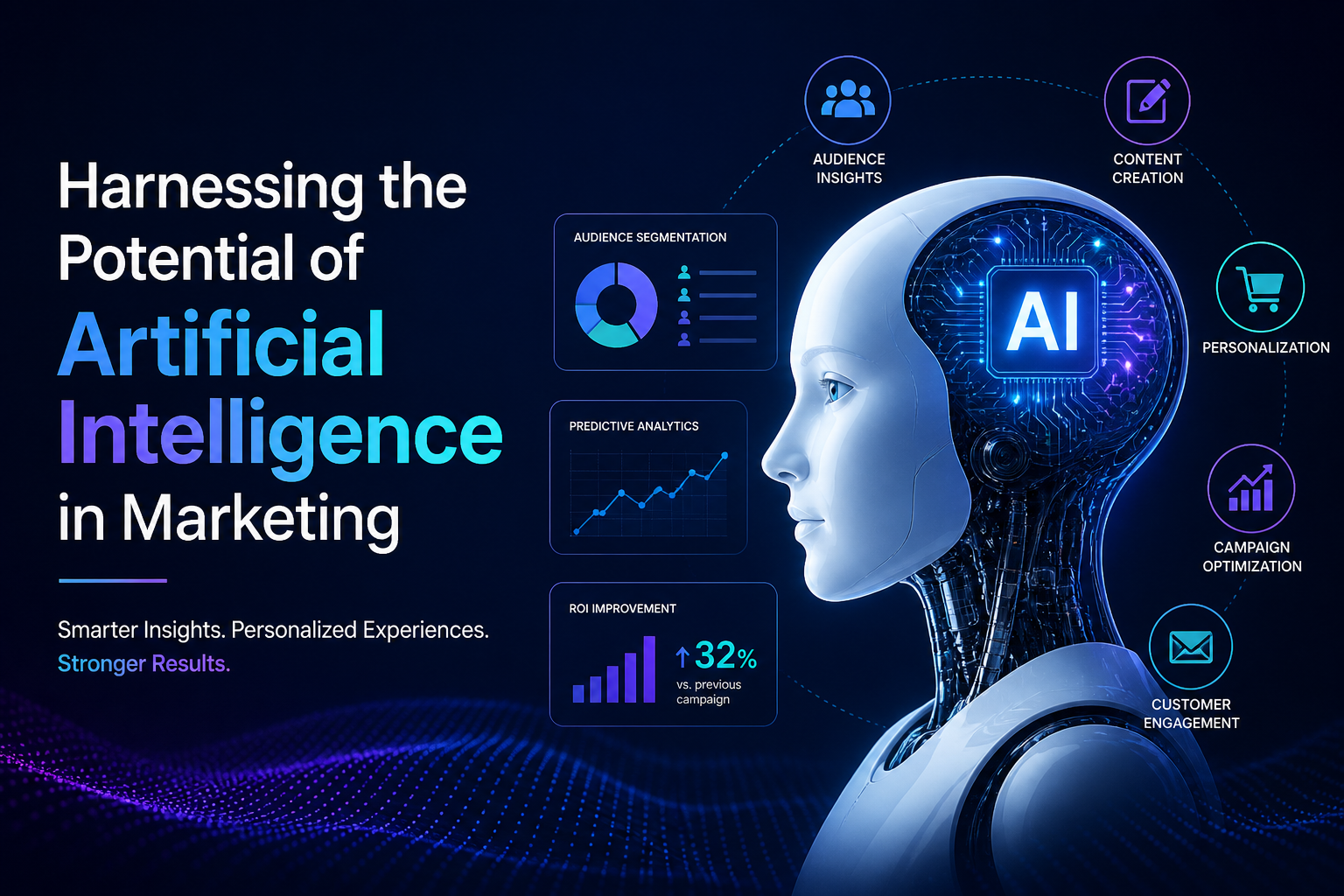
As the digital landscape evolves at an unprecedented pace, marketers face the exhilarating challenge of staying ahead in an ever-competitive environment. Artificial Intelligence (AI) emerges as a powerful ally, reshaping marketing strategies by offering innovative solutions that enhance engagement, optimize targeting, and drive conversions. By harnessing AI technologies, businesses can analyze vast amounts of data to deliver personalized experiences that resonate with consumers, ultimately transforming the way brands connect with their audience. Understanding this dynamic shift is essential for marketers looking to thrive in today’s fast-paced market.
To illustrate the strong impact of AI on marketing efficiency, consider the following statistics showcasing its benefits in the industry:
| Metric | Before AI Adoption | After AI Adoption |
|---|---|---|
| Customer Engagement Rate | 25% | 45% |
| Lead Conversion Rate | 10% | 20% |
| Return on Investment (ROI) | 150% | 300% |
These numbers not only highlight the tangible benefits of integrating AI into marketing strategies but also emphasize the need for marketers to adapt and evolve. As businesses increasingly rely on data-driven insights, the future of marketing will be shaped by those who embrace AI technologies. By understanding how to implement these tools effectively, professionals can unlock new growth opportunities and redefine their brand’s presence in an era where informed decisions make all the difference.
Understanding Artificial Intelligence in Marketing
Artificial intelligence (AI) has revolutionized the marketing landscape, offering unprecedented opportunities for data analysis and customer engagement. At its core, AI enables marketers to make data-driven decisions, streamlining their processes and improving efficiency. With AI, businesses can personalize their marketing strategies, ensuring relevant messaging reaches the right audience at the right time.
This technological shift not only enhances customer experiences but also optimizes marketing budgets. By utilizing machine learning and predictive analytics, companies can gauge customer preferences and behaviors more accurately. As a result, businesses can refine their campaigns, increasing conversion rates and maximizing return on investment (ROI).
Benefits of AI in Marketing Automation
AI-driven marketing automation provides an array of benefits that streamline operations and enhance productivity. One key advantage is the ability to perform repetitive tasks efficiently, such as sending emails or managing social media posts. This frees up time for marketers to focus on creative and strategic initiatives, boosting overall effectiveness.
Furthermore, AI automation can improve lead scoring and segmentation. By analyzing various customer metrics, AI helps in identifying high-potential leads, ensuring that marketing efforts are concentrated where they matter most. Automated workflows reduce human error, providing marketers with the confidence to rely on data-driven insights.
Personalization and Customer Engagement
AI plays a pivotal role in personalizing marketing messages to resonate with individual consumers. By leveraging data from previous interactions, AI can analyze customer behavior and preferences, tailoring communications that enhance user engagement. This targeted approach often leads to stronger customer relationships and loyalty.
For instance, AI applications can generate personalized recommendations based on browsing history. Companies like Netflix and Amazon use similar algorithms, resulting in significant increases in conversion rates. Personalization powered by AI transforms the customer journey into a more meaningful experience that drives sales and brand loyalty.
Data Analysis and Predictive Analytics
Data analysis sits at the heart of modern marketing strategies, with AI enhancing its capabilities exponentially. By employing advanced algorithms, teams can sift through vast amounts of data to identify trends and insights that inform decision-making. This precise analysis enables marketers to craft strategies that resonate with their target audience.
Predictive analytics, a key component of data analysis, allows businesses to forecast outcomes based on historical data. With AI, marketers can anticipate customer behaviors, tailoring offerings according to the predicted needs of their audience. This proactive approach leads to improved marketing efficiency and effectiveness.
Utilizing Machine Learning for Insights
Machine learning algorithms excel at analyzing data, enabling marketers to derive actionable insights. These algorithms process diverse datasets to unveil patterns and trends that the human eye might miss. As a result, marketers can make informed decisions that drive business growth, often without extensive manual intervention.
For instance, consider the following types of insights gained through machine learning models:
- Customer segmentation highlights specific demographics to target.
- Churn prediction identifies users likely to disengage.
- Sales forecasting anticipates future revenue based on trends.
Real-time Analytics for Agile Marketing
Real-time analytics powered by AI allows marketers to act swiftly, adapting campaigns based on current consumer trends and behaviors. This agility ensures that marketing efforts reflect what resonates with the audience at any given moment. Real-time data facilitates quick adjustments, ultimately enhancing user satisfaction and engagement.
With platforms offering real-time insights, businesses can track metrics such as website traffic, conversion rates, and social media engagement instantaneously. These insights form the backbone of agile marketing strategies, resulting in more relevant and timely interventions that lead to successful outcomes.
The Role of AI in Content Creation
Content is king in the digital marketing domain, and AI elevates content creation processes. By automating content generation and curation, AI saves time while ensuring high-quality output. These tools leverage natural language processing to create engaging and relevant content that meets audience expectations.
Additionally, AI can analyze performance metrics, offering insights into what types of content perform best. This data-driven approach enables marketers to refine their content strategies continuously, resulting in higher engagement and conversion rates.
Automated Content Generation Tools
Several automated content generation tools exist that utilize AI to produce engaging articles, blogs, and posts. These technologies have proven especially valuable in scenarios where content needs to be generated quickly and at scale. Platforms like GPT-3 and Jasper utilize advanced algorithms to craft human-like text based on parameters set by users.
Key features of these tools include:
- Scalability, generating multiple pieces of content in a short time.
- SEO optimization, ensuring content ranks well in search engines.
- Personalization options, tailoring content to specific demographics.
Enhancing Creativity with AI Tools
AI tools not only automate but also enhance the creative process within content marketing. Applications like Adobe Sensei offer intelligent features that assist marketers in developing visually compelling graphics and videos. By providing recommendations and templates, these tools enable marketers to focus on ideation rather than execution.
This creative partnership between humans and machines leads to innovative marketing campaigns that stand out. As AI tools contribute to brainstorming and design, marketers can explore new avenues for storytelling and engagement, driving impactful results.
Challenges of Implementing AI in Marketing
While AI offers numerous advantages, implementing it in marketing presents various challenges. Organizations often grapple with integrating AI systems into existing infrastructure. Ensuring compatibility and alignment with current marketing platforms is essential for seamless operations.
Additionally, data privacy concerns arise when leveraging AI for customer insights. Marketers must navigate legal regulations while using consumer data responsibly. Striking a balance between personalization and privacy is crucial for ethical AI deployment in marketing.
Overcoming Data Privacy Concerns
Data privacy occupies a central role in discussions about AI in marketing. Businesses must prioritize compliance with regulations such as GDPR and CCPA when utilizing consumer data. Transparency with consumers regarding how their data is collected and used fosters trust and loyalty, mitigating backlash against AI initiatives.
Companies can adopt best practices, including:
- Implementing robust data encryption methods.
- Providing clear privacy policies for consumer understanding.
- Offering opt-in choices for users to control data usage.
Integration into Existing Marketing Platforms
Integrating AI into existing marketing platforms involves navigating various technicalities. Organizations often require specialized knowledge and tools to ensure effective deployment. Choosing the right AI solutions compatible with current systems enhances operational efficiency and minimizes disruptions.
Companies should conduct thorough assessments of their existing platforms, identifying gaps that AI can address. Engaging with professionals in the field can facilitate a smoother integration process, paving the way for a successful AI implementation that aligns with marketing goals.
Future Trends in AI-Driven Marketing
The future of marketing is heavily intertwined with advancements in AI technology. As systems become more sophisticated, marketers will increasingly rely on machine learning and data analysis to tailor their strategies. The trend toward hyper-personalization will dominate, ensuring that consumers receive relevant content that meets their immediate needs.
Moreover, the growth of voice and visual search emphasizes the necessity for marketers to adapt. AI will enable more natural interactions, driving innovation in how brands engage customers. This dynamic landscape promises substantial opportunities and challenges as technology continues to evolve.
Hyper-Personalization Techniques
Hyper-personalization goes beyond basic personalization, employing AI to deliver tailored experiences that meet individual consumer needs. By leveraging detailed data points, businesses can craft messages and offers that resonate profoundly with each customer. This strategy improves engagement and conversion rates, providing a competitive edge in crowded markets.
Examples of hyper-personalization techniques include:
- Dynamic content that adapts based on user behavior.
- Location-based marketing that delivers timely offers.
- Customized email campaigns based on previous purchases.
The Impact of Voice and Visual Search
As voice and visual search technologies advance, AI will play a pivotal role in shaping marketing strategies. Voice search enables users to interact with brands using natural language, and AI enhances understanding of intent behind queries. Marketers must optimize content for voice search to maintain visibility.
Similarly, visual search allows consumers to explore products using images, making it crucial for brands to employ advanced image recognition technologies. Companies that adapt to these search trends will enhance user engagement and drive conversions significantly, highlighting the need for continuous adaptation in marketing strategies.
Summary
As the digital landscape rapidly evolves, marketers face the challenge of staying competitive. Artificial Intelligence (AI) is increasingly becoming a key resource, transforming marketing strategies by enhancing engagement, optimizing targeting, and driving conversions. By leveraging AI, businesses can analyze data to create personalized consumer experiences. The impact of AI on marketing efficiency is significant, as evidenced by statistics showing customer engagement rates increasing from 25% to 45%, lead conversion rates from 10% to 20%, and ROI doubling from 150% to 300%. To thrive, marketers must adapt to these data-driven insights and effectively implement AI technologies.
FAQ
How can AI improve customer segmentation in marketing?
AI enhances customer segmentation by analyzing vast amounts of data to identify patterns and behaviors within target demographics. Traditional methods often rely on broad categories, which may overlook nuances in customer preferences. With AI, marketers can employ machine learning algorithms to dive deep into user data, revealing micro-segments that can be targeted more effectively. This level of granularity not only improves the precision of marketing efforts but also allows for highly personalized campaigns that resonate more deeply with potential customers.
Additionally, AI’s predictive analytics capabilities enable businesses to anticipate customer needs and preferences. By examining historical data, AI can forecast future behaviors, guiding marketers in crafting messages tailored to specific segments. This proactive approach enhances customer engagement and satisfaction, as individuals receive offers and content that truly match their interests. As a result, companies can foster stronger relationships with their audience, ultimately driving higher conversion rates and customer loyalty over time.
In what ways does AI enhance content creation for marketing?
AI significantly streamlines the content creation process by using natural language processing to generate text that aligns with specific branding guidelines. Tools like AI writing assistants can produce blog posts, social media updates, and even ad copy based on key themes and targeted keywords. This reduces the time marketers spend brainstorming ideas, enabling them to focus on strategy and execution. Moreover, AI can analyze existing high-performing content, offering insights on what resonates best with audiences, ensuring that content creation is both data-driven and relevant.
Furthermore, AI-powered tools can optimize content for different platforms, ensuring consistency in messaging while adapting the style to fit each venue’s audience. For example, an AI can suggest different headlines or formats that work better for social media as opposed to email newsletters. This capability not only saves time but also allows brands to maximize their reach and effectiveness across multiple channels. Consequently, the integration of AI in content creation not only boosts efficiency but also enhances the overall impact of marketing campaigns.
How does AI contribute to customer engagement in marketing?
AI contributes to customer engagement through personalized interactions, tailoring experiences to meet individual preferences. By analyzing user data, AI can offer recommendations, personalized emails, and chatbots that effectively address customer inquiries in real-time. These tailored experiences make customers feel valued, enhancing their overall satisfaction and fostering a deeper connection with the brand. Engaging customers on a personal level increases the likelihood of repeat business and encourages word-of-mouth referrals, which are invaluable for brand growth.
Moreover, AI enables marketers to track and analyze engagement metrics promptly, facilitating adjustments to strategies as necessary. This ability to fine-tune campaigns based on real-time feedback ensures that marketing efforts remain relevant and effective. For instance, if a certain type of content is performing well, AI can recommend scaling similar initiatives. Additionally, automated chat solutions can keep customers engaged round-the-clock, providing immediate assistance and creating a seamless experience. Overall, the integration of AI in engagement strategies not only enhances customer satisfaction but also drives business performance.
What ethical considerations should marketers keep in mind when using AI?
When leveraging AI in marketing, ethical considerations take center stage to ensure consumer trust and compliance with regulations. One significant concern involves data privacy; marketers must ensure they collect and use customer data transparently and responsibly. This means obtaining proper consent, informing customers about how their data will be used, and safeguarding that information against breaches. Ensuring compliance with data protection laws, such as GDPR, is essential in maintaining customer trust and protecting the brand’s reputation.
Additionally, the potential for bias in AI algorithms poses another ethical challenge. AI systems learn from historical data, which may inadvertently reflect societal biases, leading to skewed marketing strategies that perpetuate stereotypes. Marketers need to actively audit their AI tools for fairness and inclusivity, ensuring that their campaigns resonate positively with diverse audiences. By being mindful of these ethical aspects, marketers can harness AI’s potential responsibly, fostering trust while creating impactful, equitable marketing strategies.

