


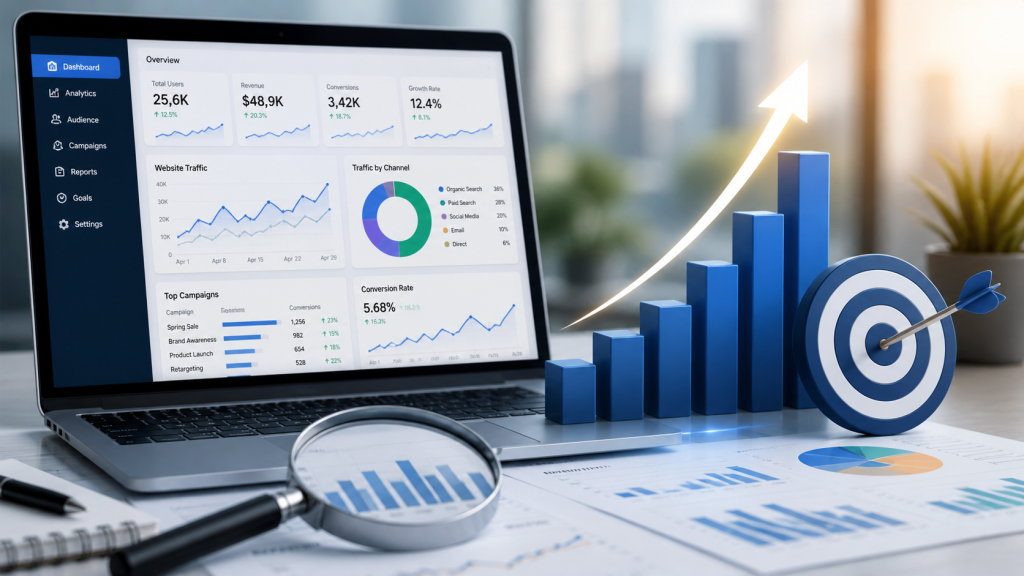
In today’s fast-paced digital landscape, understanding the nuances of marketing analysis is no longer an optional strategy; it’s a vital component for driving business growth. Brands that can harness the power of data find themselves ahead of the curve, armed with insights that guide decision-making processes, optimize campaigns, and enhance customer engagement. By transitioning raw data into actionable strategies, businesses not only glean a deeper understanding of their audience but also pave the way for impactful marketing efforts that resonate and convert.
To illustrate this transformation, consider the following data on the effectiveness of various marketing channels. Research shows that integrating analysis into marketing decisions can significantly boost ROI:
| Marketing Channel | Average ROI | Conversion Rate |
|---|---|---|
| Email Marketing | 42:1 | 2.4% |
| Social Media Advertising | 28:1 | 3.5% |
| Content Marketing | 22:1 | 2.9% |
| Search Engine Optimization | 22:1 | 5.1% |
These figures clearly demonstrate how leveraging marketing analysis can heighten effectiveness across multiple channels. By tapping into the insights garnered from data, businesses can refine their marketing strategies, ensuring that every dollar spent yields maximum returns. Moreover, aligning marketing initiatives with analytical findings not only cultivates a smarter approach but also fosters an agile business model that adapts to ever-changing consumer dynamics, ultimately ensuring sustained growth.
Understanding Marketing Analysis
Marketing analysis serves as the foundation for informed business decisions. By systematically examining market trends, consumer behavior, and competitive landscapes, businesses gain valuable insights that drive strategies. This initial understanding helps companies identify opportunities and challenges, allowing them to align their products and services with market demands.
Furthermore, marketing analysis goes beyond surface-level insights. It encompasses various techniques such as SWOT analysis, PEST analysis, and data analytics. This comprehensive approach enables businesses to unearth hidden trends and patterns, giving them a competitive edge. As data becomes increasingly abundant, mastering marketing analysis is essential for sustained growth in the digital age.
Components of Marketing Analysis
The primary components of marketing analysis include market research, customer segmentation, and competitive analysis. Each component plays a crucial role in shaping effective marketing strategies. Market research focuses on gathering data about target demographics, preferences, and behaviors, which informs product development and marketing campaigns.
Customer segmentation categorizes consumers based on shared characteristics, allowing businesses to tailor their offerings more effectively. Competitive analysis involves scrutinizing rivals’ strengths and weaknesses, enabling companies to position their products strategically. Together, these components create a robust marketing foundation, facilitating data-driven decisions that lead to greater business impact.
Importance of Data-Driven Decision Making
Data-driven decision-making is vital in today’s fast-paced business environment. Leveraging analytics helps organizations make informed choices, reducing risks associated with gut-feeling approaches. Businesses can track and assess various KPIs, such as conversion rates, to fine-tune their marketing efforts and enhance performance.
Moreover, data-driven strategies promote transparency and accountability within teams. When data informs strategies, it fosters a culture of continuous improvement and innovation. This approach not only enhances operational efficiency but also encourages a results-oriented mindset that can significantly boost business growth.
Techniques for Collecting Market Insights
To gather market insights effectively, businesses can utilize both qualitative and quantitative research methods. Qualitative techniques, such as focus groups and interviews, offer in-depth perspectives from consumers. On the other hand, quantitative methods, such as surveys, yield numerical data, which is essential for statistical analysis.
Incorporating a mix of both techniques ensures comprehensive data collection. Here’s a simple table comparing qualitative and quantitative methods:
| Qualitative Methods | Quantitative Methods |
|---|---|
| Focus Groups | Surveys |
| Interviews | Statistical Analysis |
| Observations | Questionnaires |
Transforming Insights into Action
Transforming insights from marketing analysis into actionable strategies is crucial for achieving business growth. Businesses must understand how to interpret data effectively to create actionable plans that address customer needs. This is where the true value of marketing analysis is realized, enabling organizations to adapt and thrive in competitive landscapes.
Processes such as strategic planning and operational execution help convert theoretical insights into practical applications. By aligning strategies with market insights, companies can drive innovation, refine customer experiences, and ultimately enhance their market positions. This transformational journey is essential for gaining and maintaining a competitive advantage.
Implementing Strategies Based on Insights
To implement strategies effectively, businesses should prioritize actionable goals based on gathered insights. One approach could involve utilizing SMART criteria—Specific, Measurable, Achievable, Relevant, and Time-bound—to ensure clarity and focus. This structured approach can simplify the execution process and enhance accountability.
Additionally, teams should regularly review and adjust strategies based on ongoing analysis and performance metrics. Flexibility in implementation allows businesses to pivot when necessary and capitalize on emerging opportunities in their market.
Measuring the Impact of Marketing Analysis
Measuring the impact of marketing analysis involves assessing the effectiveness of strategies through defined metrics. Companies can monitor various KPIs, such as customer retention rates, return on investment (ROI), and sales growth, to gauge success. Consistent evaluation of these metrics enables businesses to understand the direct correlation between analysis and growth outcomes.
Furthermore, visualizing data through dashboards and reports can facilitate clearer insights. Metrics can be structured as follows:
| Metric | Description | Target Value |
|---|---|---|
| Customer Retention Rate | Percentage of previous customers who return | 75% |
| ROI | Revenue generated per dollar spent on marketing | 4:1 |
| Sales Growth | Increase in sales over a specific period | 20% |
Case Studies on Successful Implementation
Real-world case studies illustrate the success of leveraging marketing analysis for business growth. These examples emphasize how effective implementation of insights can lead to substantial improvements in performance and market share. Analyzing failed and successful campaigns provides valuable lessons that other businesses can learn from.
Examining various industries highlights the versatility of marketing analysis. Businesses can adapt insights to their specific context, demonstrating that understanding one’s market is a universal principle for achieving growth. The findings from these case studies reinforce the critical role of marketing analysis in shaping business success.
Learning from Industry Examples
Examining industry leaders provides invaluable lessons. Companies like Netflix and Amazon continually adapt their strategies based on consumer insights. Netflix uses viewer data to curate personalized recommendations and shape original content, while Amazon analyzes purchasing patterns to optimize inventory and improve customer experiences.
Here are key takeaways from these examples:
- Rely on data to inform product development and marketing campaigns.
- Personalization enhances customer satisfaction and loyalty.
- Adaptability to changing consumer preferences drives success.
Key Lessons from Marketing Failures
Not all marketing campaigns succeed. Analyzing failures can provide critical insights into what not to do. Companies often fail to adapt to market trends or misinterpret consumer needs, leading to wasted resources and missed opportunities. Brands like Blockbuster illustrate the consequences of neglecting analysis, ultimately failing to evolve with the industry.
Learning from these missteps is essential. Companies should foster a culture of continual assessment and recalibration to avoid similar pitfalls. Key lessons include remaining adaptable, listening to consumer feedback, and consistently monitoring competitor movements.
Summary
In today’s digital landscape, effective marketing analysis is essential for business growth. Brands that leverage data gain insights for informed decision-making, optimized campaigns, and improved customer engagement. For instance, integrating analysis into marketing can significantly enhance ROI across various channels: Email Marketing shows a 42:1 ROI with a 2.4% conversion rate, while Social Media Advertising achieves 28:1 and 3.5%, respectively. Content and SEO also demonstrate solid returns at 22:1, with conversion rates of 2.9% and 5.1%. Ultimately, data-driven strategies enable businesses to maximize returns and adapt effectively to changing consumer dynamics.
FAQ
How can marketing analysis drive business growth?
Marketing analysis serves as a vital compass for businesses seeking growth by providing data-driven insights into consumer behavior, market trends, and competitive landscapes. By systematically evaluating metrics such as customer demographics, purchase patterns, and engagement rates, companies can identify areas for improvement and capitalize on new opportunities. This analytical foundation enables businesses to tailor their offerings and marketing strategies to meet the specific needs and preferences of their target audience.
Moreover, harnessing these insights fosters informed decision-making within an organization. With a clearer understanding of market dynamics, businesses can allocate resources more effectively, optimize their marketing campaigns, and enhance customer experiences. This proactive approach not only accelerates growth but also builds stronger, long-term relationships with customers, driving loyalty and repeat business.
What tools are essential for effective marketing analysis?
Several tools stand out in the realm of marketing analysis, providing businesses with the necessary frameworks to gather, analyze, and act on data. Google Analytics is a fundamental resource, enabling companies to track website traffic, user behaviors, and conversion rates efficiently. Additionally, platforms like SEMrush or Ahrefs offer insights into search engine optimization (SEO), helping businesses understand their online visibility and competitor performance.
Beyond these foundational tools, customer relationship management (CRM) systems play a crucial role by centralizing customer data and interactions. This allows businesses to analyze customer journey touchpoints and derive actionable insights. By integrating these tools, organizations can create a comprehensive picture of their marketing performance, leading to better strategy formulation and ultimately driving growth.
How should businesses prioritize their marketing analysis efforts?
To maximize the benefits of marketing analysis, businesses should begin by setting clear, measurable objectives aligned with their growth goals. This involves identifying key performance indicators (KPIs) that matter most to their operations, such as conversion rates, customer acquisition costs, and lifetime value. By focusing on the metrics that directly impact their business, companies can ensure that their analysis is not only relevant but also actionable.
Additionally, organizations must maintain a balance between short-term and long-term analysis. While immediate marketing trends can provide quick wins, understanding broader market changes and consumer behavior shifts is crucial for sustainable growth. By prioritizing a mix of tactical and strategic insights, businesses can remain agile in their marketing efforts while steadily working toward their overarching goals.
How can businesses ensure that insights from marketing analysis are effectively implemented?
Translating marketing analysis insights into actionable strategies requires clear communication across all levels of the organization. This begins with establishing a culture that values data-driven decision-making. Teams should be trained to interpret data and share insights collaboratively, ensuring that everyone understands how these findings influence their roles. Regular meetings, workshops, and reports can help reinforce this mindset, making insights part of the organization’s DNA.
Furthermore, businesses must implement processes to test and iterate based on these insights. This involves creating flexible marketing strategies that allow for adjustments based on real-time data feedback. By fostering an environment of experimentation and continuous improvement, organizations can more effectively leverage their marketing analysis and drive impactful business outcomes. This holistic approach ensures that every marketing decision contributes to growth and aligns with overarching business objectives.